BEGIN:VCALENDAR
VERSION:2.0
PRODID:-//Clinical &amp; Translational Sciences//NONSGML Events//EN
CALSCALE:GREGORIAN
X-ORIGINAL-URL:https://icts.wustl.edu/events/
X-WR-CALDESC:Clinical &amp; Translational Sciences - Events
BEGIN:VEVENT
UID:20250122T0626Z-1737527174.4787-EO-47687-1@10.73.4.128
STATUS:CONFIRMED
DTSTAMP:20260417T202102Z
CREATED:20250122T055703Z
LAST-MODIFIED:20250424T171212Z
DTSTART;TZID=America/Chicago:20250507T090000
DTEND;TZID=America/Chicago:20250507T130000
SUMMARY: 7th Annual ICTS Symposium
DESCRIPTION: Please join us for the 7th annual symposium hosted by the Inst
 itute of Clinical and Translational Sciences. This year’s theme highlights 
 differences in translational research versus translational science and how 
 projects can be adapted to overcome longstanding challenges along the resea
 rch pipeline.  Highlights include keynote address from Ruth O’Hara\, PhD (S
 tanford University)\, and presentations and panels providing real-world exa
 mples of utilizing […]
X-ALT-DESC;FMTTYPE=text/html: <p><img class="aligncenter wp-image-47841 siz
 e-full" src="https://icts.wustl.edu/app/uploads/2025/01/2025-ICTS-Symposium
 -1.png" alt="Accelerating Translation: The Science of Moving Forward" width
 ="1024" height="512" /></p><p class="is-style-lead"><em>Please join us for 
 the 7th annual symposium hosted by the Institute of Clinical and Translatio
 nal Sciences.</em></p><p>This year's theme highlights differences in transl
 ational research versus translational science and how projects can be adapt
 ed to overcome longstanding challenges along the research pipeline.  Highli
 ghts include keynote address from <a href="https://nam10.safelinks.protecti
 on.outlook.com/?url=https%3A%2F%2Fprofiles.stanford.edu%2Fruth-ohara&data=0
 5%7C02%7Ctolliver.m%40wustl.edu%7C2348b3422560421b9ad208dd5a607061%7C4ccca3
 b571cd4e6d974b4d9beb96c6d6%7C0%7C0%7C638766092431769144%7CUnknown%7CTWFpbGZ
 sb3d8eyJFbXB0eU1hcGkiOnRydWUsIlYiOiIwLjAuMDAwMCIsIlAiOiJXaW4zMiIsIkFOIjoiTW
 FpbCIsIldUIjoyfQ%3D%3D%7C0%7C%7C%7C&sdata=4xNqwqVwa1fn7azEyaS2NfHD6Pkch6flb
 j322%2BJJSnA%3D&reserved=0" target="_blank" rel="noopener">Ruth O'Hara\, Ph
 D</a> (Stanford University)\, and presentations and panels providing real-w
 orld examples of utilizing <a href="https://nam10.safelinks.protection.outl
 ook.com/?url=https%3A%2F%2Fncats.nih.gov%2Fabout%2Fabout-translational-scie
 nce%2Fprinciples&data=05%7C02%7Ctolliver.m%40wustl.edu%7C2348b3422560421b9a
 d208dd5a607061%7C4ccca3b571cd4e6d974b4d9beb96c6d6%7C0%7C0%7C638766092431790
 478%7CUnknown%7CTWFpbGZsb3d8eyJFbXB0eU1hcGkiOnRydWUsIlYiOiIwLjAuMDAwMCIsIlA
 iOiJXaW4zMiIsIkFOIjoiTWFpbCIsIldUIjoyfQ%3D%3D%7C0%7C%7C%7C&sdata=tvTgdhMlkU
 FIpfNoqtFXYaVnJY6zBQYU5pSN7reunAE%3D&reserved=0" target="_blank" rel="noope
 ner">translational science principles</a> in research.</p><div class="wp-bl
 ock-button aligncenter"><a class="wp-block-button__link wp-element-button" 
 href="https://redcap.wustl.edu/redcap/surveys/?s=AFP9RTHWFLYC9NMJ" target="
 blank">Register here</a></div><div class="wp-block-washu-accordions accordi
 on"><dt class="accordion-header" aria-expanded="false" id="accordion-header
 -0" role="tab" aria-controls="accordion-header-0" aria-selected="true" tabi
 ndex="0"><span class="accordion-header-content">Speakers</span><svg width="
 20" height="20" viewBox="0 0 20 20"><path fill="#a51417" d="M5 6l5 5 5-5 2 
 1-7 7-7-7z"></path></svg></dt><dd class="accordion-content" id="accordion-c
 ontent-0" role="tabpanel" aria-labelledby="accordion-header-0" aria-hidden=
 "true"><h3 class="wp-block-heading">Keynote Speaker</h3><div class="wp-bloc
 k-columns is-layout-flex wp-container-core-columns-is-layout-1 wp-block-col
 umns-is-layout-flex"><div class="wp-block-column is-layout-flow wp-block-co
 lumn-is-layout-flow" style="flex-basis:33.33%"><figure class="wp-block-imag
 e size-full"><img loading="lazy" decoding="async" width="280" height="386" 
 src="https://icts.wustl.edu/app/uploads/2024/04/Ruth-OHara-280x386-1.png" a
 lt="""" class="wp-image-46371" srcset="https://icts.wustl.edu/app/uploads/2
 024/04/Ruth-OHara-280x386-1.png 280w\, https://icts.wustl.edu/app/uploads/2
 024/04/Ruth-OHara-280x386-1-218x300.png 218w" sizes="auto\, (max-width: 280
 px) 100vw\, 280px"></figure></div><div class="wp-block-column is-layout-flo
 w wp-block-column-is-layout-flow" style="flex-basis:66.66%"><p><a href="htt
 ps://med.stanford.edu/profiles/ruth-ohara" target="_blank" rel="noreferrer 
 noopener"><strong>Ruth O’Hara\, PhD</strong></a><br />Director\, Spectrum\,
  Stanford Center for Clinical and Translational Research and Education\; Se
 nior Associate Dean of Research\, Stanford School of Medicine\; Lowell W. a
 nd Josephine Q. Berry Professor of Psychiatry and Behavioral Sciences\, Sta
 nford University</p><p>O’Hara is the Senior Associate Dean of Research at t
 he Stanford University School of Medicine and the Lowell W. and Josephine Q
 . Berry Professor of Psychiatry and Behavioral Sciences. She directs a broa
 d interdisciplinary clinical research program\, encompassing cellular model
 s\, physiological predictors\, and brain and behavioral assays of psychiatr
 ic\, medical\, and cognitive disorders. The core of O’Hara’s research is to
  investigate how cognitive information processing deficits subserve affecti
 ve symptoms in psychiatric disorders and interact with key brain networks i
 ntegral to these disorders. Her body of research has played a key role in s
 hifting the paradigm to defining\, assessing\, and targeting psychiatric di
 sorders more fully based on their cognitive information-processing deficits
  and underlying neurocircuitry. Her current research interests are in sleep
 \, pediatrics\, and aging.</p></div></div><h3 class="wp-block-heading">Pres
 enters</h3><div class="wp-block-columns is-layout-flex wp-container-core-co
 lumns-is-layout-2 wp-block-columns-is-layout-flex"><div class="wp-block-col
 umn is-layout-flow wp-block-column-is-layout-flow" style="flex-basis:33.33%
 "><figure class="wp-block-image size-full"><img loading="lazy" decoding="as
 ync" width="280" height="386" src="https://icts.wustl.edu/app/uploads/2024/
 03/Jacob-Greenberg-280x386-1.jpg" alt="""" class="wp-image-48105" srcset="h
 ttps://icts.wustl.edu/app/uploads/2024/03/Jacob-Greenberg-280x386-1.jpg 280
 w\, https://icts.wustl.edu/app/uploads/2024/03/Jacob-Greenberg-280x386-1-21
 8x300.jpg 218w" sizes="auto\, (max-width: 280px) 100vw\, 280px"></figure></
 div><div class="wp-block-column is-layout-flow wp-block-column-is-layout-fl
 ow" style="flex-basis:66.66%"><p><a href="https://neurosurgery.wustl.edu/pe
 ople/jacob-greenberg-md-ms/" target="_blank" rel="noreferrer noopener"><str
 ong>Jacob Greenberg\, MD\, MSCI</strong></a><br />Assistant Professor\, Neu
 rosurgery and Orthopedic Surgery\; Co-Director\, Patient Safety and Quality
  Improvement\, Department of Neurosurgery\; WashU Medicine</p><p>Greenberg 
 is an Assistant Professor of Neurosurgery and Orthopedic Surgery at Washing
 ton University and is also co-director of patient safety and quality improv
 ement in neurosurgery. He completed his undergraduate\, medical school\, an
 d neurosurgery residency at Washington University before going to the Cleve
 land Clinic for a complex spine surgery fellowship. His clinical practice f
 ocuses on the surgical management of patients with spine disease\, particul
 arly cervical and lumbar disease. Dr. Greenberg’s academic focus is on usin
 g clinical research methods\, data science\, and clinical informatics tools
  to improve outcomes for patients with spine disease. His work is currently
  supported by the NIH\, DoD\, as well as a variety of institutional and soc
 ietal funding sources.</p></div></div><div class="wp-block-columns is-layou
 t-flex wp-container-core-columns-is-layout-3 wp-block-columns-is-layout-fle
 x"><div class="wp-block-column is-layout-flow wp-block-column-is-layout-flo
 w" style="flex-basis:33.33%"><figure class="wp-block-image size-full"><img 
 loading="lazy" decoding="async" width="280" height="386" src="https://icts.
 wustl.edu/app/uploads/2024/03/James-Krings-280x386-1.jpg" alt="""" class="w
 p-image-48106" srcset="https://icts.wustl.edu/app/uploads/2024/03/James-Kri
 ngs-280x386-1.jpg 280w\, https://icts.wustl.edu/app/uploads/2024/03/James-K
 rings-280x386-1-218x300.jpg 218w" sizes="auto\, (max-width: 280px) 100vw\, 
 280px"></figure></div><div class="wp-block-column is-layout-flow wp-block-c
 olumn-is-layout-flow" style="flex-basis:66.66%"><p><a href="https://pulmona
 ry.wustl.edu/people/james-krings-md-msci/" target="_blank" rel="noreferrer 
 noopener"><strong>James Krings\, MD\, MSCI</strong></a><br />Assistant Prof
 essor of Medicine\, Pulmonary and Critical Care Medicine\; WashU Medicine</
 p><p>Krings is an Assistant Professor of Medicine in the Division of Pulmon
 ary & Critical Care Medicine at WashU Medicine. He received his medical deg
 ree from Stanford University and completed his residency in internal medici
 ne at Northwestern University before returning to his home of St. Louis to 
 complete his Pulmonary & Critical care training at WashU.  He is a graduate
  of multiple programs within the ICTS\, including the MTPCI\, MSCI\, KL2\, 
 and Mentored Training in Implementation Science (MTIS) Program. He is curre
 ntly supported by a K23 for his work on a study entitled “CHEST: A Collabor
 ation with Community Health Centers to Implement SMART for Asthma.”</p></di
 v></div><div class="wp-block-columns is-layout-flex wp-container-core-colum
 ns-is-layout-4 wp-block-columns-is-layout-flex"><div class="wp-block-column
  is-layout-flow wp-block-column-is-layout-flow" style="flex-basis:33.33%"><
 figure class="wp-block-image size-full"><img loading="lazy" decoding="async
 " width="280" height="386" src="https://icts.wustl.edu/app/uploads/2024/03/
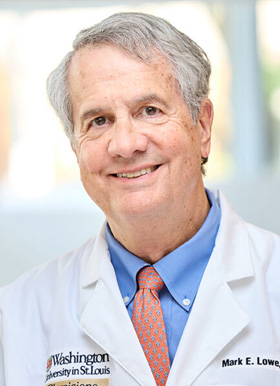
 Mark-Lowe-280x386-1.jpg" alt="""" class="wp-image-48107" srcset="https://ic
 ts.wustl.edu/app/uploads/2024/03/Mark-Lowe-280x386-1.jpg 280w\, https://ict
 s.wustl.edu/app/uploads/2024/03/Mark-Lowe-280x386-1-218x300.jpg 218w" sizes
 ="auto\, (max-width: 280px) 100vw\, 280px"></figure></div><div class="wp-bl
 ock-column is-layout-flow wp-block-column-is-layout-flow" style="flex-basis
 :66.66%"><p><a href="https://pediatrics.wustl.edu/people/mark-e-lowe-md-phd
 /" target="_blank" rel="noreferrer noopener"><strong>Mark Lowe\, MD\, PhD</
 strong></a><br />Professor of Pediatrics\, Gastroenterology\, Hepatology & 
 Nutrition\; Harvey R Colten Professor of Pediatric Science\; Senior Associa
 te Dean for Research\; Vice Chancellor for Research\; Vice Chair\, Pediatri
 cs Clinical Affairs and Strategic Planning\; WashU Medicine</p><p>Lowe is t
 he Harvey R. Colten Professor of Pediatric Science\, the Vice Chancellor fo
 r Research\, and Senior Associate Dean for Research at WashU Medicine. He o
 btained a PhD in Biochemistry from the University of Pennsylvania and worke
 d at the National Institutes of Health before attending medical school at t
 he University of Miami. He did a Pediatric residency and fellowship in Pedi
 atric Gastroenterology at St. Louis Children’s Hospital before joining the 
 faculty at WashU Medicine. Lowe spent 14 years at UPMC Pittsburgh Children’
 s Hospital as the Chief of Pediatric Gastroenterology before returning to W
 ashU Medicine in 2017. His research interests are the biochemistry of fat d
 igestion and understanding the mechanisms of chronic pancreatitis in childr
 en.</p></div></div><div class="wp-block-columns is-layout-flex wp-container
 -core-columns-is-layout-5 wp-block-columns-is-layout-flex"><div class="wp-b
 lock-column is-layout-flow wp-block-column-is-layout-flow" style="flex-basi
 s:33.33%"><figure class="wp-block-image size-full"><img loading="lazy" deco
 ding="async" width="280" height="386" src="https://icts.wustl.edu/app/uploa
 ds/2024/02/Laura-McPherson-280x386-1.png" alt="""" class="wp-image-46135" s
 rcset="https://icts.wustl.edu/app/uploads/2024/02/Laura-McPherson-280x386-1
 .png 280w\, https://icts.wustl.edu/app/uploads/2024/02/Laura-McPherson-280x
 386-1-218x300.png 218w" sizes="auto\, (max-width: 280px) 100vw\, 280px"></f
 igure></div><div class="wp-block-column is-layout-flow wp-block-column-is-l
 ayout-flow" style="flex-basis:66.66%"><p><a href="https://pt.wustl.edu/peop
 le/laura-mcpherson-pt-dpt-phd/" target="_blank" rel="noreferrer noopener"><
 strong>Laura McPherson\, DPT\, PhD</strong></a><br />Assistant Professor\, 
 Physical Therapy and Neurology\; WashU Medicine</p><p>McPherson is a biomed
 ical engineer\, neuroscientist\, and physical therapist. Her research ident
 ifies mechanisms of pathological neural control of movement in the multiple
  sclerosis and hemiparetic stroke populations and how they relate to motor 
 deficits. Long-term goals are to leverage this information to develop targe
 ted rehabilitation therapies that are personalized to each patient’s unique
  pathophysiology and to provide sensitive disease monitoring tools.  Her re
 search team uses a combination of non-invasive recordings of motor unit pop
 ulation discharge\, biomechanical measurements\, and computational neurosci
 ence approaches. Her translational science line of research is developing a
  large-scale open dataset to increase the rigor and efficiency of translati
 onal research in her field.</p></div></div><div class="wp-block-columns is-
 layout-flex wp-container-core-columns-is-layout-6 wp-block-columns-is-layou
 t-flex"><div class="wp-block-column is-layout-flow wp-block-column-is-layou
 t-flow" style="flex-basis:33.33%"><figure class="wp-block-image size-full">
 <img loading="lazy" decoding="async" width="280" height="386" src="https://
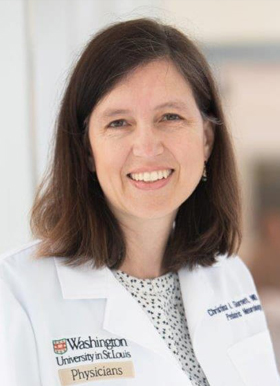
 icts.wustl.edu/app/uploads/2024/02/Christine-OBrien-280x386-1.png" alt=""""
  class="wp-image-46138" srcset="https://icts.wustl.edu/app/uploads/2024/02/
 Christine-OBrien-280x386-1.png 280w\, https://icts.wustl.edu/app/uploads/20
 24/02/Christine-OBrien-280x386-1-218x300.png 218w" sizes="auto\, (max-width
 : 280px) 100vw\, 280px"></figure></div><div class="wp-block-column is-layou
 t-flow wp-block-column-is-layout-flow" style="flex-basis:66.66%"><p><a href
 ="https://engineering.washu.edu/faculty/Christine-OBrien.html"><strong>Chri
 stine O’Brien\, PhD</strong></a><br />Assistant Professor\, Biomedical Engi
 neering<br />McKelvey School of Engineering<br />WashU\, MO</p><p>O’Brien i
 s an Assistant Professor of Biomedical Engineering at WashU with a secondar
 y appointment in the Department of Obstetrics & Gynecology. Her research is
  focused on developing and translating non-invasive optical spectroscopy an
 d imaging tools to solve global problems in maternal-fetal health. She obta
 ined her PhD in Biomedical Engineering at Vanderbilt University and complet
 ed postdoctoral training at WashU Medicine in the Department of Radiology. 
 She launched her independent research program with projects focused on the 
 development of novel wearable sensors for the early detection of postpartum
  hemorrhage and novel strategies for preterm birth detection and investigat
 ion.</p></div></div><div class="wp-block-columns is-layout-flex wp-containe
 r-core-columns-is-layout-7 wp-block-columns-is-layout-flex"><div class="wp-
 block-column is-layout-flow wp-block-column-is-layout-flow" style="flex-bas
 is:33.33%"><figure class="wp-block-image size-full"><img loading="lazy" dec
 oding="async" width="280" height="386" src="https://icts.wustl.edu/app/uplo
 ads/2024/03/Max-Petersen-280x386-1.jpg" alt="" class="wp-image-48273" srcse
 t="https://icts.wustl.edu/app/uploads/2024/03/Max-Petersen-280x386-1.jpg 28
 0w\, https://icts.wustl.edu/app/uploads/2024/03/Max-Petersen-280x386-1-218x
 300.jpg 218w" sizes="auto\, (max-width: 280px) 100vw\, 280px"></figure></di
 v><div class="wp-block-column is-layout-flow wp-block-column-is-layout-flow
 " style="flex-basis:66.66%"><p><a href="https://endocrinology.wustl.edu/peo
 ple/max-petersen-md-phd/" target="_blank" rel="noreferrer noopener"><strong
 >Max Petersen\, MD\, PhD</strong></a><br />Assistant Professor of Medicine\
 , Endocrinology\, Metabolism & Lipid Research<br />WashU Medicine</p><p>Pet
 ersen is an active clinical and translational investigator focused on the i
 nteractions among nutrition\, obesity\, and insulin resistance in people. R
 ecent areas of investigation include the physiology of metabolically health
 y obesity and the impact of dietary macronutrient composition on metabolic 
 health during weight loss. He is a KL2 Career Development Award Scholar at 
 WashU Medicine. Additionally\, his research has been recognized with awards
  from the Endocrine Society\, the Obesity Society\, and the American Physic
 ian-Scientist Association. He sees patients with diabetes\, obesity\, and r
 elated diseases in the endocrinology clinic of WashU Medicine.</p><p><a id=
 "_msocom_1"></a></p></div></div><div class="wp-block-columns is-layout-flex
  wp-container-core-columns-is-layout-8 wp-block-columns-is-layout-flex"><di
 v class="wp-block-column is-layout-flow wp-block-column-is-layout-flow" sty
 le="flex-basis:33.33%"><figure class="wp-block-image size-full"><img loadin
 g="lazy" decoding="async" width="280" height="386" src="https://icts.wustl.
 edu/app/uploads/2024/03/Politi_Mary.jpg" alt="""" class="wp-image-48108" sr
 cset="https://icts.wustl.edu/app/uploads/2024/03/Politi_Mary.jpg 280w\, htt
 ps://icts.wustl.edu/app/uploads/2024/03/Politi_Mary-218x300.jpg 218w" sizes
 ="auto\, (max-width: 280px) 100vw\, 280px"></figure></div><div class="wp-bl
 ock-column is-layout-flow wp-block-column-is-layout-flow" style="flex-basis
 :66.66%"><p><a href="https://publichealth.wustl.edu/people/mary-c-politi/" 
 target="_blank" rel="noreferrer noopener"><strong>Mary Politi\, PhD</strong
 ></a><br />Professor\; School of Public Health\; WashU\, MO</p><p>Politi is
  a Professor at the School of Public Health at WashU. Her primary research 
 interests include health communication and shared decision-making. Her work
  helps patients and the public understand health information\, explore what
  is important to them when making health decisions\, and collaborate to mak
 e evidence-informed decisions that meet their needs. She also focuses on re
 ducing the financial toxicity (burden of care costs) of health care through
  insurance decisions and discussions about cost-saving strategies. Politi’s
  research includes engaging communities with unmet health needs and includi
 ng them in both research and dissemination efforts. She works to ensure tha
 t her research is relevant to end users in clinical and community settings.
 </p></div></div><div class="wp-block-columns is-layout-flex wp-container-co
 re-columns-is-layout-9 wp-block-columns-is-layout-flex"><div class="wp-bloc
 k-column is-layout-flow wp-block-column-is-layout-flow" style="flex-basis:3
 3.33%"><figure class="wp-block-image size-full"><img loading="lazy" decodin
 g="async" width="280" height="386" src="https://icts.wustl.edu/app/uploads/
 2024/03/Lauren-Roland-280x386-1.jpg" alt="" class="wp-image-48274" srcset="
 https://icts.wustl.edu/app/uploads/2024/03/Lauren-Roland-280x386-1.jpg 280w
 \, https://icts.wustl.edu/app/uploads/2024/03/Lauren-Roland-280x386-1-218x3
 00.jpg 218w" sizes="auto\, (max-width: 280px) 100vw\, 280px"></figure></div
 ><div class="wp-block-column is-layout-flow wp-block-column-is-layout-flow"
  style="flex-basis:66.66%"><p><a href="https://oto.wustl.edu/people/lauren-
 roland-md/" target="_blank" rel="noreferrer noopener"><strong>Lauren Roland
 \, MD</strong></a><br />Assistant Professor\, Otolaryngology<br />WashU Med
 icine</p><p>Roland is an Assistant Professor of Otolaryngology at the WashU
  School of Medicine. She is a rhinologist with an interest in fungal sinusi
 tis and the intersection of pathogen and host nasal epithelium. She studies
  invasive fungal sinusitis\, a rare infection with high mortality\, which p
 rimarily affects severely immunosuppressed patients. She also specializes i
 n anterior skull base disease\, including chronic rhinosinusitis\, nasal po
 lyps\, nasal obstruction\, and CSF leaks.</p><p><a id="_msocom_1"></a></p><
 /div></div><h3 class="wp-block-heading">Moderators</h3><div class="wp-block
 -columns is-layout-flex wp-container-core-columns-is-layout-10 wp-block-col
 umns-is-layout-flex"><div class="wp-block-column is-layout-flow wp-block-co
 lumn-is-layout-flow" style="flex-basis:33.33%"><figure class="wp-block-imag
 e size-full"><img loading="lazy" decoding="async" width="280" height="386" 
 src="https://icts.wustl.edu/app/uploads/2022/04/Christina-Gurnett-280x386-1
 .jpg" alt="Christina Gurnett\, MD\, PhD" class="wp-image-26675" srcset="htt
 ps://icts.wustl.edu/app/uploads/2022/04/Christina-Gurnett-280x386-1.jpg 280
 w\, https://icts.wustl.edu/app/uploads/2022/04/Christina-Gurnett-280x386-1-
 218x300.jpg 218w" sizes="auto\, (max-width: 280px) 100vw\, 280px"></figure>
 </div><div class="wp-block-column is-layout-flow wp-block-column-is-layout-
 flow" style="flex-basis:66.66%"><p><strong><a href="https://gurnettlab.wust
 l.edu/people/christina-a-gurnett-md-phd/" target="_blank" rel="noreferrer n
 oopener">Christina Gurnett\, MD\, PhD</a></strong><br />A. Ernest and Jane 
 G. Stein Professor of Neurology\;<br />Director\, Division of Pediatric and
  Developmental Neurology\; Co-Director\, Intellectual and Developmental Dis
 abilities Research Center\; Associate Director\, Institute of Clinical and 
 Translational Sciences\; WashU\, MO\; Neurologist-in-Chief of St Louis Chil
 dren’s Hospital</p><p>Gurnett runs an active neurogenetics research program
  that has had continuous NIH funding since 2005\, supporting her work to st
 udy the genetic basis of musculoskeletal and neurodevelopmental disabilitie
 s. Her research reflects her strong commitment to improving equity in genet
 ic testing\, as she currently leads a large-scale R01 genome sequencing stu
 dy of African Americans with adolescent idiopathic scoliosis. Her commitmen
 t to community-engaged research is highlighted by her leadership of two Nat
 ional Institutes of Health-funded Rapid Acceleration of Diagnostics-Underse
 rved Population (RADx-UP) projects whose goals were to study communication 
 strategies to increase SARS-CoV-2 testing in schools for children with inte
 llectual and developmental disabilities. As a highly sought-after mentor\, 
 Gurnett also co-directs the Precision Medicine Pathway for graduate student
 s and is the co-PI of an R25 providing intensive summer research experience
 s in pediatric neurosciences for high school students from underrepresented
  backgrounds.</p></div></div><div class="wp-block-columns is-layout-flex wp
 -container-core-columns-is-layout-11 wp-block-columns-is-layout-flex"><div 
 class="wp-block-column is-layout-flow wp-block-column-is-layout-flow" style
 ="flex-basis:33.33%"><figure class="wp-block-image size-full"><img loading=
 "lazy" decoding="async" width="280" height="386" src="https://icts.wustl.ed
 u/app/uploads/2022/04/William-Powderly-280x386-1.jpg" alt="William Powderly
 \, MD" class="wp-image-26726" srcset="https://icts.wustl.edu/app/uploads/20
 22/04/William-Powderly-280x386-1.jpg 280w\, https://icts.wustl.edu/app/uplo
 ads/2022/04/William-Powderly-280x386-1-218x300.jpg 218w" sizes="auto\, (max
 -width: 280px) 100vw\, 280px"></figure></div><div class="wp-block-column is
 -layout-flow wp-block-column-is-layout-flow" style="flex-basis:66.66%"><p><
 a href="https://infectiousdiseases.wustl.edu/people/william-g-powderly/" ta
 rget="_blank" rel="noreferrer noopener"><strong>William Powderly\, MD</stro
 ng></a><br />J. William Campbell Professor of Medicine\; Associate Dean for
  Clinical and Translational Sciences\; Director\, Institute of Clinical and
  Translational Sciences\; Larry J. Shapiro Director\, Institute for Public 
 Health\; Co-Director of the Division of Infectious Diseases\; WashU\, MO</p
 ><p>Powderly is currently the Director of the Washington University Institu
 te for Public Health\, Director of the Institute of Clinical and Translatio
 nal Sciences\, and Co-director of the Division of Infectious Diseases. He h
 as been actively involved in HIV-related clinical research for thirty years
 . He has been a member of numerous advisory groups on HIV and infectious di
 seases for the NIH\, the CDC\, the Canadian Institute for Health Research\,
  and the European Medicines Agency. His major recent focus has been on tran
 slating scientific advances to a wider population to improve public health.
 </p></div></div><div class="wp-block-columns is-layout-flex wp-container-co
 re-columns-is-layout-12 wp-block-columns-is-layout-flex"><div class="wp-blo
 ck-column is-layout-flow wp-block-column-is-layout-flow" style="flex-basis:
 33.33%"><figure class="wp-block-image size-full"><img loading="lazy" decodi
 ng="async" width="280" height="386" src="https://icts.wustl.edu/app/uploads
 /2024/05/Nancy-Sweitzer-280x386-1.png" alt="" class="wp-image-46687" srcset
 ="https://icts.wustl.edu/app/uploads/2024/05/Nancy-Sweitzer-280x386-1.png 2
 80w\, https://icts.wustl.edu/app/uploads/2024/05/Nancy-Sweitzer-280x386-1-2
 18x300.png 218w" sizes="auto\, (max-width: 280px) 100vw\, 280px"></figure><
 /div><div class="wp-block-column is-layout-flow wp-block-column-is-layout-f
 low" style="flex-basis:66.66%"><p><a href="https://cardiology.wustl.edu/peo
 ple/nancy-k-sweitzer-md-phd/" target="_blank" rel="noreferrer noopener"><st
 rong>Nancy Sweitzer\, MD\, PhD</strong></a><br />Associate Director\, Insti
 tute for Clinical and Translational Sciences (ICTS)\; Director of Clinical 
 and Translational Science Award Translational Workforce Development (CTSA T
 WD)\; Director of Clinical Research Training Center (CRTC)\; Vice Chair of 
 Clinical Research\, Department of Medicine\; Director of Clinical Research\
 , Cardiovascular Division\; WashU Medicine</p><p>Sweitzer is a Professor an
 d Vice-Chair for Clinical Research in the Department of Medicine at WashU M
 edicine. She is also the Associate Director of the Institute for Clinical a
 nd Translational Sciences. Sweitzer is an advanced heart failure and transp
 lant cardiologist\, and clinical scientist recognized for her leadership an
 d experience in clinical trials. She has led and collaborated on numerous c
 linical trials sponsored by the NIH and by industry and academic sponsors\,
  including leadership roles in the TOPCAT and PARAGON trials in HFpEF. She 
 has previously served on and chaired the Clinical Trials Review Committee o
 f the National Heart Lung and Blood Institute of NIH. Sweitzer earned her u
 ndergraduate degree at the University of Pennsylvania\, her doctorate in ph
 ysiology\, and her medical degree from the University of Wisconsin in Madis
 on. She did her post-graduate training in medicine\, cardiology\, and heart
  failure and transplant cardiology at Brigham and Women’s Hospital.</p></di
 v></div></dd><dt class="accordion-header" aria-expanded="false" id="accordi
 on-header-1" role="tab" aria-controls="accordion-header-1" aria-selected="f
 alse" tabindex="0"><span class="accordion-header-content">Agenda</span><svg
  width="20" height="20" viewBox="0 0 20 20"><path fill="#a51417" d="M5 6l5 
 5 5-5 2 1-7 7-7-7z"></path></svg></dt><dd class="accordion-content" id="acc
 ordion-content-1" role="tabpanel" aria-labelledby="accordion-header-1" aria
 -hidden="true"><figure class="wp-block-table"><table><tbody><tr><td>8:30 am
 </td><td>Attendee check-in</td></tr><tr><td>9:00 – 9:20 am</td><td>Welcome 
 by ICTS Director <a href="https://infectiousdiseases.wustl.edu/people/willi
 am-g-powderly/" target="_blank" rel="noreferrer noopener">William Powderly<
 /a>\, MD</p><p>School of Medicine Remarks by <a href="https://research.wash
 u.edu/about/vice-chancellor-for-research/" target="_blank" rel="noreferrer 
 noopener">Mark Lowe</a>\, MD\, PhD\, Vice Chancellor for Research</p><p><st
 rong><em>ICTS Update and Future Directions</em></strong></p><p>Dr. Powderly
  will highlight ICTS achievements and discuss future initiatives as the ICT
 S embarks upon its 18<sup>th</sup> year of consecutive funding from the Nat
 ional Center for Advancing Translational Sciences.</td></tr><tr><td>9:20 – 
 9:50 am</td><td>Introduction by William Powderly\, MD</p><p>Keynote address
 : <a href="https://med.stanford.edu/profiles/ruth-ohara" target="_blank" re
 l="noreferrer noopener">Ruth O’Hara</a>\, PhD</p><p>Director\; Spectrum\, S
 tanford Center for Clinical and Translational Research and Education</p><p>
 “<em>The Role of CTSAs in the Science of Translation</em>”</td></tr><tr><td
 >9:50 – 10:05 am</td><td>Q&A with Dr. O’Hara</p><p>Moderated by William Pow
 derly\, MD</td></tr><tr><td>10:05 – 10:50 am</td><td>Research Panel: Transi
 tioning from Translational Research to Science: Real-World Examples</p><p>P
 anelists:</p><ul class="wp-block-list"><li><a href="https://pt.wustl.edu/pe
 ople/laura-mcpherson-pt-dpt-phd/" target="_blank" rel="noreferrer noopener"
 >Laura McPherson</a>\, PhD\, DPT\; Assistant Professor of Physical Therapy<
 /li><li><a href="https://engineering.washu.edu/faculty/Christine-OBrien.htm
 l" target="_blank" rel="noreferrer noopener">Christine O’Brien</a>\, PhD\; 
 Assistant Professor of Engineering (Biomedical)</li><li><a href="https://su
 rgery.wustl.edu/people/mary-politi/" target="_blank" rel="noreferrer noopen
 er">Mary Politi</a>\, PhD\; Professor\, School of Public Health</li></ul><p
 >Moderated by <a href="https://cardiology.wustl.edu/people/nancy-k-sweitzer
 -md-phd/">Nancy Sweitzer</a>\, MD\, PhD</td></tr><tr><td>10:50 – 11:00 am</
 td><td>Break</td></tr><tr><td>11:00 – 11:45 pm</td><td>Junior Investigator 
 Flash Talks: Integration of Translational Science Principles</p><ul class="
 wp-block-list"><li><a href="https://endocrinology.wustl.edu/people/max-pete
 rsen-md-phd/" target="_blank" rel="noreferrer noopener">Max Petersen</a>\, 
 MD\, PhD\; Assistant Professor of Medicine (Endocrinology\, Metabolism\, & 
 Lipid Research)</li><li><a href="https://oto.wustl.edu/people/lauren-roland
 -md/" target="_blank" rel="noreferrer noopener">Lauren Roland</a>\, MD\; As
 sistant Professor of Otolaryngology</li></ul><p>Moderated by William Powder
 ly\, MD</td></tr><tr><td>11:45 am – 12:30 pm</td><td>Research Panel: Harnes
 sing Disruption for Translational Science</p><p>Panelists:</p><ul class="wp
 -block-list"><li><a href="https://neurosurgery.wustl.edu/people/jacob-green
 berg-md-ms/" target="_blank" rel="noreferrer noopener">Jacob Greenberg</a>\
 , MD\, MSCI\; Assistant Professor of Neurosurgery</li><li><a href="https://
 pulmonary.wustl.edu/people/james-krings-md-msci/" target="_blank" rel="nore
 ferrer noopener">James Krings</a>\, MD\, MSCI\; Assistant Professor of Medi
 cine (Pulmonary and Critical Care Medicine)</li><li>Ruth O’Hara\, PhD</li><
 /ul><p>Moderated by <a href="https://gurnettlab.wustl.edu/">Christina Gurne
 tt</a>\, MD\, PhD</td></tr><tr><td>12:30 – 1:00 pm</td><td>Boxed lunches av
 ailable</td></tr></tbody></table></figure></dd><dt class="accordion-header"
  aria-expanded="false" id="accordion-header-2" role="tab" aria-controls="ac
 cordion-header-2" aria-selected="false" tabindex="0"><span class="accordion
 -header-content">Sponsors</span><svg width="20" height="20" viewBox="0 0 20
  20"><path fill="#a51417" d="M5 6l5 5 5-5 2 1-7 7-7-7z"></path></svg></dt><
 dd class="accordion-content " id="accordion-content-2" role="tabpanel" aria
 -labelledby="accordion-header-2" aria-hidden="true"><ul class="wp-block-lis
 t"><li><a href="https://iddrc.wustl.edu/" target="_blank" rel="noreferrer n
 oopener">Intellectual and Developmental Disabilities Research Center (IDDRC
 )</a></li><li><a href="https://i2db.wustl.edu/" target="_blank" rel="norefe
 rrer noopener">Institute for Informatics\, Data Science & Biostatistics (I2
 DB)</a></li><li><a href="https://siteman.wustl.edu/" target="_blank" rel="n
 oreferrer noopener">Siteman Cancer Center</a></li></ul></dd></div><p><i>Vis
 it this page for up-to-date details on the agenda and speakers.</i></p>
LOCATION:Eric P. Newman Education Center (EPNEC)
GEO:38.636837;-90.262403
ORGANIZER;CN="McKinzie":MAILTO:tolliver.m@wustl.edu
URL;VALUE=URI:https://icts.wustl.edu/events/event/7th-annual-icts-symposium
 /
END:VEVENT
BEGIN:VTIMEZONE
TZID:America/Chicago
BEGIN:DAYLIGHT
TZOFFSETFROM:-0600
TZOFFSETTO:-0500
DTSTART:20250309T080000
TZNAME:CDT
END:DAYLIGHT
END:VTIMEZONE
END:VCALENDAR