Funding advances four community-academic partnerships, current funding round closes Dec. 6 (Links to an external site)

Four projects that received Partnership Development & Sustainability Support (PDSS) from the Center for Community Health Partnership and Research are reporting successful preliminary outcomes. PDSS funding enables partners to develop the trust, infrastructure, capacity and skills needed to undertake future collaborative research. The current PDSS funding round closes December 6th.

Device for noninvasive brain biopsies via blood draw moves closer to market approval (Links to an external site)

FDA grants WashU-based technology ‘Breakthrough Device’ designation A device aimed at enabling neurosurgeons and other physicians to perform noninvasive blood-based biopsies in adults with brain tumors has received Food and Drug Administration (FDA) “Breakthrough Device” designation. The device includes technology from Washington University in St. Louis and developed by Cordance Medical Inc., a medical device […]

Wearable tech for contact tracing developed (Links to an external site)

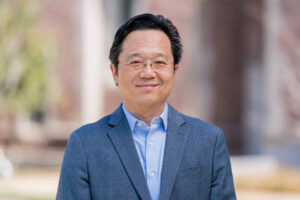
Chenyang Lu

‘Potentially powerful’ automated tool could help fight COVID, future pandemics in hospitals In the battle against COVID-19, contact tracing has proven to be a vital weapon in curbing the spread of the virus. While numerous contact tracing methods have emerged, manual contact tracing methods are often slow and inaccurate while smartphone-based tracing suffers low adoption […]

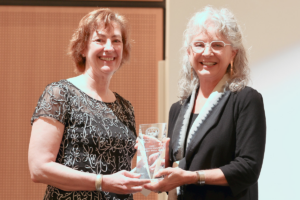
Academy honors six university faculty

Laura Bierut, MD

Six Washington University in St. Louis faculty members and one alumnus are being honored by the Academy of Science – St. Louis for their outstanding contributions to the field. They will be recognized at an awards dinner Sept. 20 at the Missouri Botanical Garden. Laura Jean Bierut, MD, is the Alumni Endowed Professor of Psychiatry […]

NIH funds study of ultrasound with genetics to treat brain disorders (Links to an external site)

Researchers have developed methods to study and manipulate areas of the brain, though many of those methods are restricted by the limited depth that light can reach within the brain. A multidisciplinary team at Washington University in St. Louis plans to overcome that limitation by integrating ultrasound with genetics to precisely modify neurons in the […]

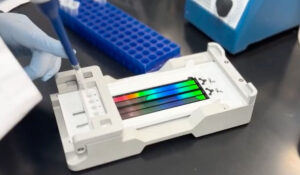
Kidney tissue atlas serves as blueprint for understanding kidney injury, disease (Links to an external site)

Research collaboration details molecular knowledge, step toward personalized medicine Scientists at Washington University School of Medicine in St. Louis are among the leaders of a multi-institution research team that has built an atlas focused on the kidney’s myriad cells. The aim of the kidney tissue atlas is to further the understanding of kidney injury and disease.