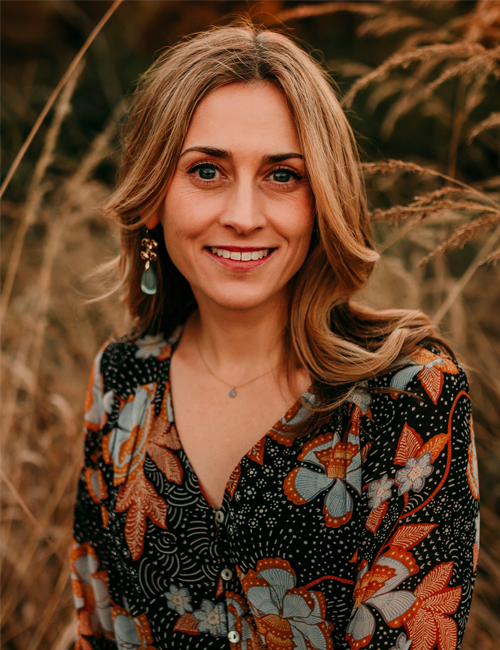
Jacquelyn Benson, PhD, Associate Professor of Medicine in the WashU Division of Palliative Medicine, has recently been awarded funding from the National Institute on Aging to conduct a randomized controlled trial to test a 1:1, paraprofessional peer-delivered multicomponent support intervention for family caregivers of persons living with Alzheimer’s disease (AD). This intervention is designed to reduce psychological distress among family caregivers of patients with Alzheimer’s disease by enhancing their self-efficacy and adaptive coping. On her path to achieving this funding, Benson praises the ICTS resources she has utilized and expresses how impactful said resources have been on furthering her research.
KL2 Program
From 2022-2024, Benson was named a scholar in the KL2 Career Development Program, housed in the Clinical Research Training Center (CRTC). Benson says her newly NIA-funded project is a direct result of the pilot trial performed during her time as a KL2 scholar, but she also learned many vital skills and sharpened her knowledge in other research areas during her time in the program, as well.
“That experience was really critical to building knowledge and skills in dissemination and implementation science,” says Benson. “My KL2 training opened up several opportunities for learning and collaboration in this field, such as attending conferences and workshops, reviewing for dissemination and implementation-focused journals, and networking with other scholars here on campus and also nationally.”
Benson also states that the KL2 training allowed her to focus on improving knowledge and skills in working with communities and conducting community-engaged research.
Community Studios
In efforts to develop her research within the KL2 program into a funded R01, Benson held two Community Studios through the Center for Community Health Partnership & Research (CCHPR). The studios aimed to understand stakeholder perspectives among dementia service providers and family caregivers for adapting an oncology-specific Peer Navigation Model of community-based psychosocial support for dementia family caregivers.
“In the project we presented at the community studios, we were working towards revising an intervention for a new population focus,” says Benson. “The feedback we received from dementia family caregivers and dementia service providers was key to our successful grant submission because we knew it was necessary to show reviewers that there was community support for adapting the intervention to a dementia caregiver population.”
MSS & Research Forum
Benson observed several ICTS NIH Mock Study Sections (MSS) during her time as a scholar, and she says these are a vital resource, especially for junior scholars, as they mirror the reviews that typically happen behind closed doors at the NIH.
“The review process can be intimidating and mysterious, so observing these sessions really helps calm your nerves,” says Benson. “The MSS lets you peek behind the curtain at how a study section at the NIH is conducted, which is what sets it apart from other forms of feedback.”
Benson’s research was also discussed during a Research Forum Program session. Benson says the mixture of expertise on the panel, such as those with broad experience in the areas of statistics and mental health, was incredibly beneficial and gave her additional exposure to what the review of her proposal at the NIH would be like.
“The guidance from these programs is critical for learning how to write proposals and respond to reviewer comments, because you see how a reviewer interprets your words on the page,” says Benson. “It’s hard to recognize where your language is unclear until someone else reads it, so that outside perspective is really invaluable.”
Team Science & Interdisciplinary Collaboration
One value the KL2 program emphasizes to investigators is the utilization in their research of team science and interdisciplinary collaboration. Benson says the end goal for her is to improve the lives of patients and families who are facing serious illnesses, and to be able to do that well requires many different people with several different backgrounds seated together at the table, looking at a project from all angles.
“It’s certainly a challenge sometimes to work on a team of individuals who come from all different backgrounds in terms of training and personal experience, but it absolutely makes your science better,” says Benson. “This is how we approach our work. Working as a team can raise issues and concerns that you may not have had yourself, but in the end, you will develop a far superior product, whether it be a grant, intervention, etc.”
The value of working together as a team is something that Benson carries with her into other projects, as well. Benson is currently a co-administrator of the LIGHT project, which is a new initiative between WashU and the Hospice Foundation for Outreach (HFO) that aims to address real-world needs of hospice caregivers through education and support programs.
ICTS Resources & Opportunities
Benson says it is so helpful for investigators to be performing their research at an institution that houses an entity like the ICTS, where there are many opportunities to advance one’s training, learn new methodologies, and gain exposure to new cutting-edge sciences.
“The ICTS does a great job surfacing resources and support services researchers need to succeed, especially those just getting started or pivoting to a new research focus,” says Benson. “What I value most is that WashU has scientists who are among the best in their fields, and the ICTS is what puts them within reach. In my case, that meant advice on securing NIH funding from researchers who are themselves successfully funded, and the best guidance on implementation science I could have asked for.”