On April 20-23, 2026, several members of the ICTS team traveled to Milwaukee, WI, to present their research. This four-day event held the theme “Building Trustworthy Translation: Rigor, Reproducibility, and Real-World Impact.”
The conference brought together leaders and emerging voices in translational science and clinical research for scientific sessions, networking, and collaboration. The ICTS team members showcased a wide range of research topics and endeavors via poster presentations and panels, summarized below. For brevity, only the poster presenters have been named.
Joyce Balls-Berry, PhD
Associate Professor of Neurology, Washington University in St. Louis
“Diversifying Your Funding Portfolio”
A critical factor in making the leap to PI is the ability to expand funding streams to support the work of the lab. Beyond federal funding, this can include foundation support, benefactor funding, industry partnerships, and entrepreneurship. In this panel, successful scientists shared information to diversify your portfolio, tips for grant-getting success, and challenges encountered along the way.
Hilary Broughton, MSW
Assistant Director, Center for Community Health Partnership & Research
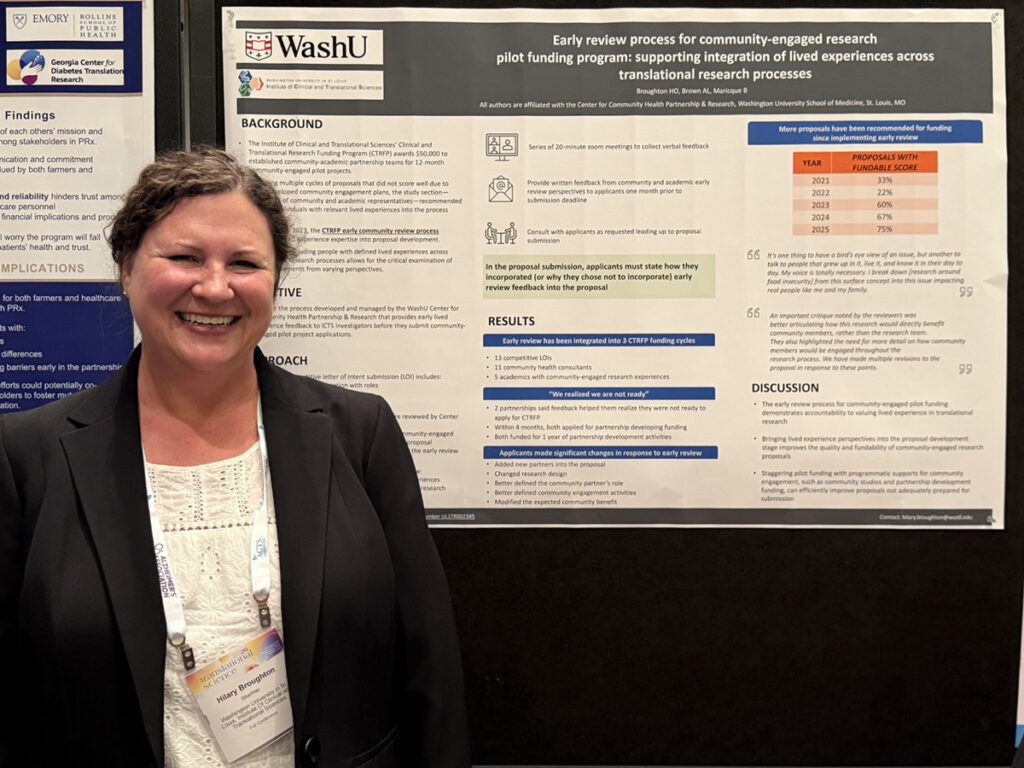
“Early Review for Pilot Project Engagement Plans and Aims: Supporting Integration of Lived Experience Across Translational Research Processes”
The early review process of the ICTS Clinical and Translational Research Funding Program (CTRFP) provides applicants with feedback from lived experience advisors in a community-engaged research funding program. Through this process, we have been able to support researchers with community engagement at the earliest stages of proposal development. We highlighted early successes, including a 3-fold increase in the number of proposals scoring in the fundable range.
“The Community Health Consultant Program: Supporting Integration of Lived Experience Across Translational Research Processes”
The Community Health Consultant Program is formed by a group of people with wide-ranging backgrounds, resources, vocations, and life journeys. We call these “lived experiences.” By creating this program, we have been able to quickly bring people with shared lived experiences together to advise researchers at different stages of translational research processes. We described the program, early successes, and rationale for adoption by other institutions.
Katie Keenoy, MA, LPC
Senior Manager of Clinical Research, Center for Clinical Studies (CCS)
Associate Director, Trial-CARE and Mobile Health Research Core (mHRC)
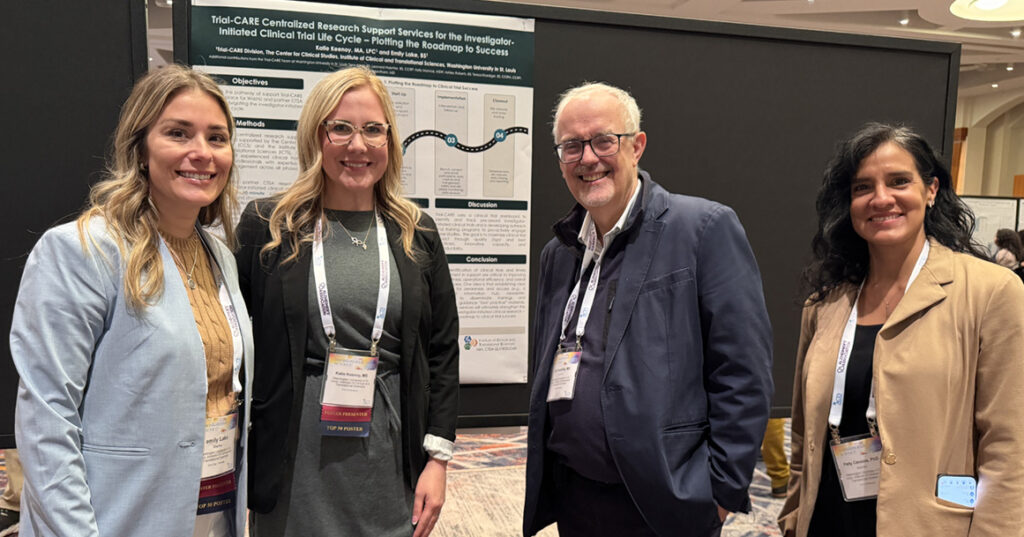
“Trial-CARE Centralized Research Support Services for the Investigator-Initiated Clinical Trial Life Cycle – Plotting the Roadmap to Success”
Trial-CARE is a centralized research service core at WashU, supported by The Center for Clinical Studies (CCS) and The Institute of Clinical and Translational Sciences (ICTS). Our poster described the resources and services Trial-CARE offers to WashU and partner CTSA investigators to ensure success across the clinical trial life cycle through improved innovation, quality, rigor, and reproducibility.
Anna La Manna, MPH, MSW
Manager of Research Translation, Center for Public Health Systems Science
“Embedding the Translational Science Benefits Model into CTSAs: Frameworks for Evaluation and Impact”
This panel session introduced the Translational Science Benefits Model (TSBM) and highlighted how CTSA hubs are using it to evaluate, communicate, and strengthen the impact of translational science. Panelists shared real-world applications at the project, program, and hub levels, including training early career scholars, evaluating community-engaged research, and integrating TSBM into hub-wide evaluation strategies. The session concluded with strategies for embedding the model into long-term CTSA practice.
Jane McElroy, PhD
Opal Lewis Distinguished Faculty Scholar & Professor
University of Missouri – Columbia
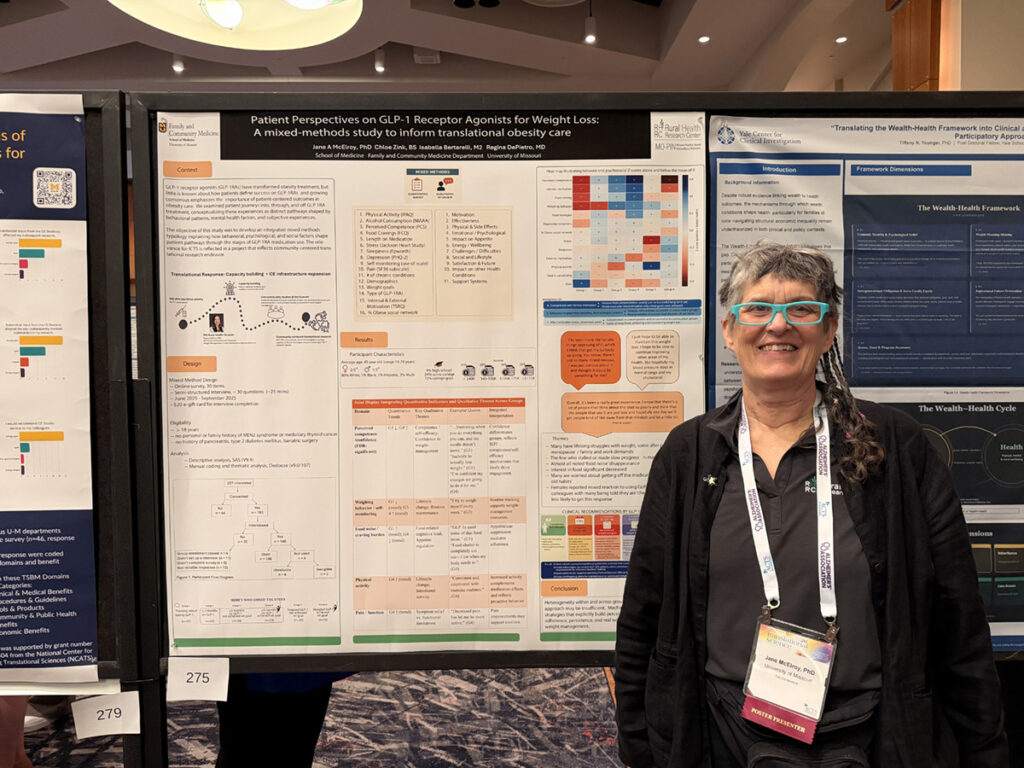
“Patient Perspectives on GLP-1 Receptor Agonists for Weight Loss: A Mixed-Methods Study to Inform Translational Obesity Care”
GLP‑1 receptor agonists (GLP‑1RAs) are effective for weight loss, yet psychosocial and behavioral factors shaping patient engagement and adherence remain insufficiently understood. We have studied and identified distinct psychosocial profiles across GLP‑1RA users, with perceived competence emerging as the only robust discriminator after correction for multiple testing. It is suggested that brief screening for confidence/competence and craving‑related factors may help tailor behavioral support, highlighting the need for mechanism‑informed, individualized interventions to optimize long-term adherence and outcomes.
Dotti McDowell, MA
Clinical Research Specialist
Community Engagement Efforts, ICTS Precision Health
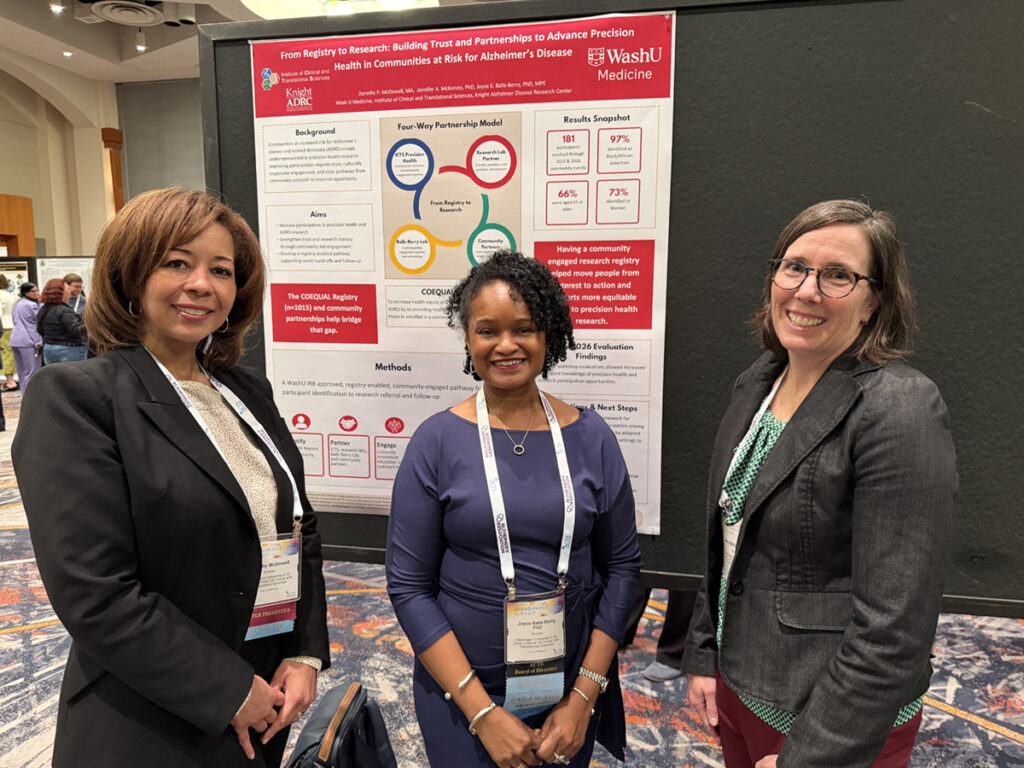
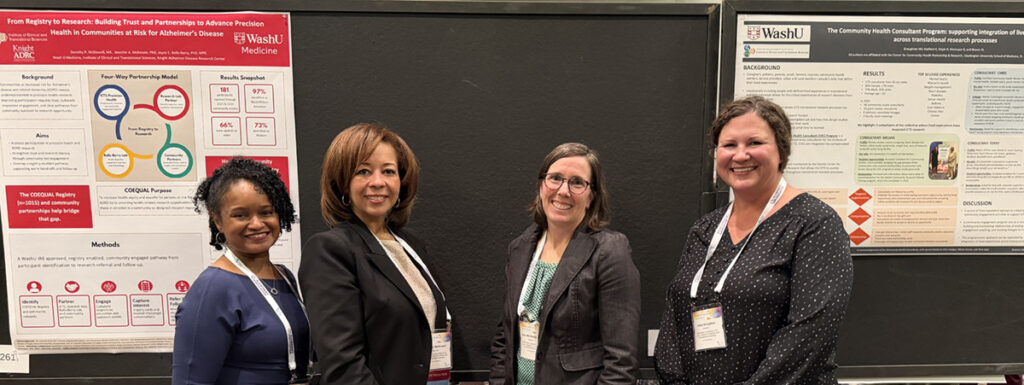
“From Registry to Research: Building Trust and Partnerships to Advance Precision Health in Communities at Risk for Alzheimer’s Disease”
Alzheimer’s disease research has often left out communities at higher risk. Our team partners with trusted community groups and uses a registry to invite people to welcoming events—like talks and dinners—where questions are answered, and next steps are clear. We connect interested attendees directly with study teams and stay in touch afterward. This approach is increasing participation and trust so that discoveries benefit everyone, not just a few.
Emmanuel Tetteh, MD, MPH
Research Assistant Professor, WashU School of Public Health
“Advancing Translational Science Impacts: Lessons from a Cross-Consortium Working Group”
Every translational science institution and research team involved faces the same question: How do we know our work is making an impact? Measuring impact is challenging, especially when it spans scientific, clinical, educational, policy, and community domains. The CTSA Consortium’s Translational Impacts Working Group was launched to tackle this challenge at the national level. Drawing members from over 50 institutions, the group has not only developed practical tools and strategies to make impact evaluation more meaningful and more manageable but has also catalyzed a community of practice to advance the study of translational impact. This panel session highlighted the group’s key work areas.
Anne Trolard, MPH
Assistant Director, Center for Community Health Partnership & Research
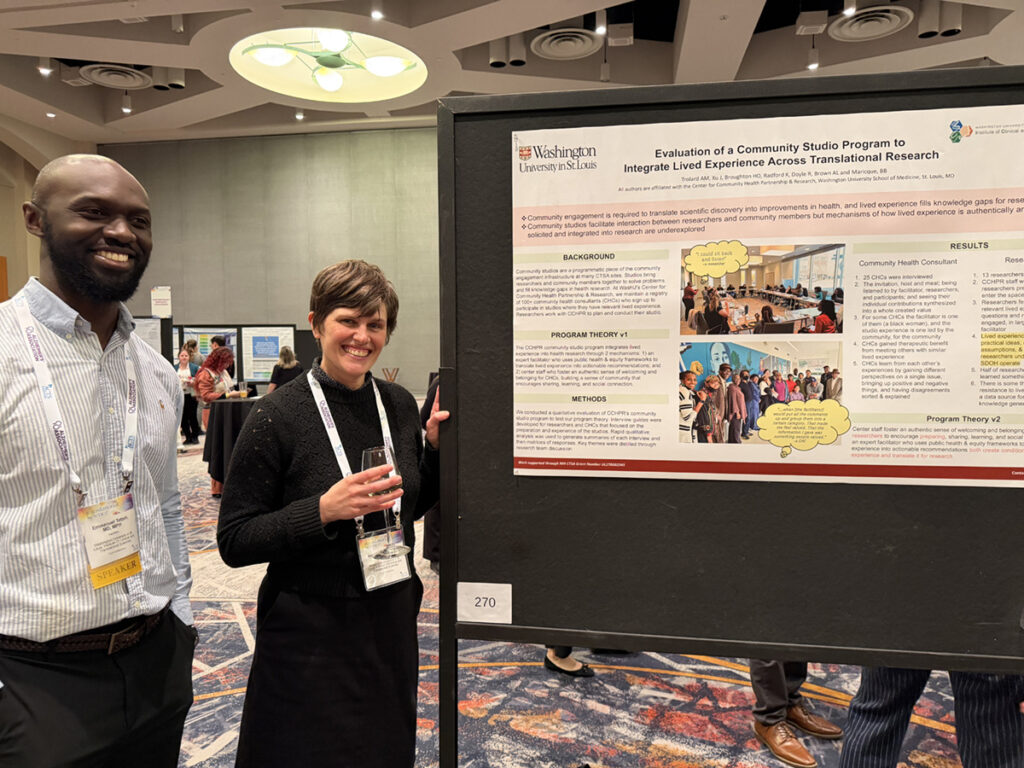
“Evaluation of a Community Studio Program to Integrate Lived Experience Across Translational Research”
This study evaluated a “community studio” program where researchers and community members connect to enhance health research by integrating lived experiences. The program, managed by the Center for Community Health Partnership and Research, involves interviews with participants and researchers, who had health degrees but no formal community research training, and community health consultants (CHCs). The program helps to fill knowledge gaps, correct assumptions, and provide practical ideas. Overall, the community studio program fosters mutual learning, creating a space where lived experiences are translated into valuable research insights.