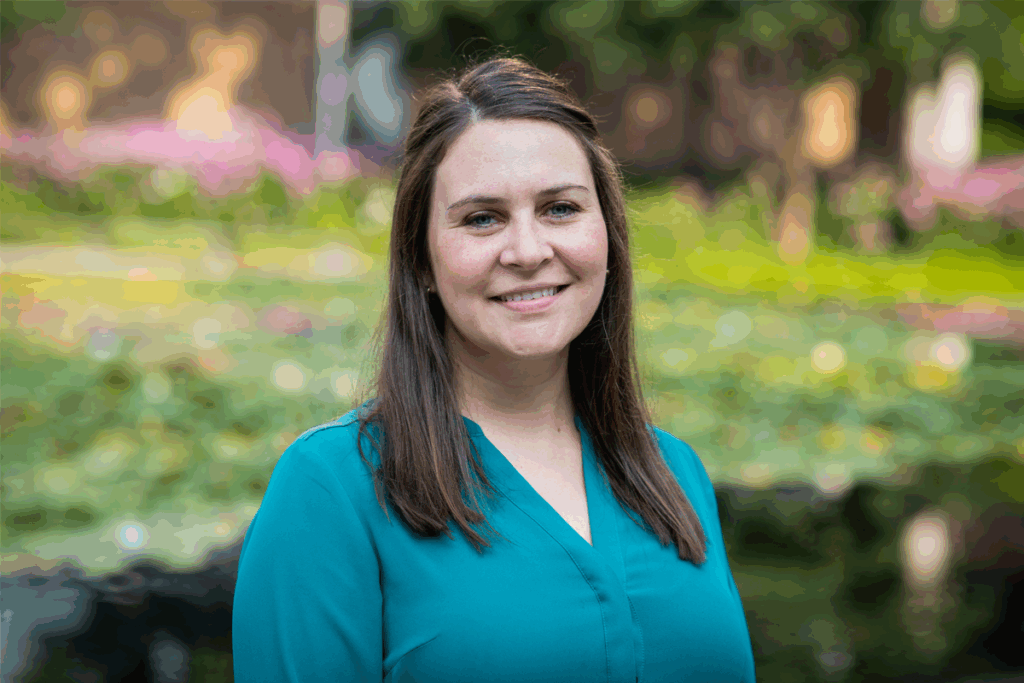
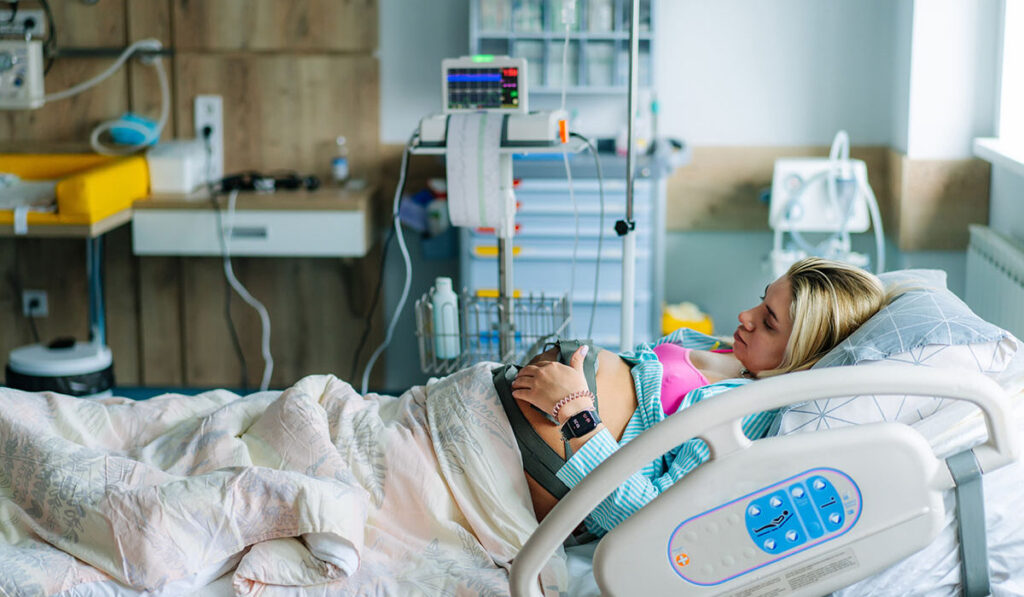
Christine O’Brien, PhD, an assistant professor of biomedical engineering at Washington University in St. Louis, was recently granted $2.8 million from the NIH to develop a wearable device to track blood loss to prevent postpartum hemorrhage – the leading cause of maternal death worldwide. The goal is to design a wearable device that tracks blood loss through measuring cardiovascular features from a novel light-based sensor that measures changes in hemoglobin and blood flow. The team proposes that this wearable device could serve as a more accurate and continuous early warning system that could potentially prevent 50% to 90% of those maternal deaths from hemorrhage when paired with adequate treatment.
NIH Mock Study Section
Before submitting this grant application to the NIH, O’Brien participated in a Mock Study Section (MSS) through the ICTS Research Development Program. The goal of this program is to help applicants improve their grant proposals and increase their chances of securing funding by receiving comprehensive feedback before grant submission. The detailed feedback provided in the MSS propelled O’Brien’s R01 grant application to score in the 2nd percentile. O’Brien has also served as a reviewer previously for an MSS, and she says it is a terrific resource with a two-fold benefit.
“The obvious benefit of the MSS is the great amount of feedback from such respected leaders in the field, who have incredibly helpful things to say and very constructive, actionable feedback,” says O’Brien. “But the second, maybe less obvious, benefit is that it really forces you as an investigator to get a full, solid draft of your grant done 2-3 months ahead of the deadline. That earlier timeline allowed me to submit a very polished version to the NIH.”

O’Brien also praises the MSS program for its training and development aspect for early-stage investigators and first-time grant submitters. She says it is not only invaluable to be able to submit your own grant to this review process, but also to sit in on the section as an observer.
“I’ve done some grant writing previously as a trainee, but it’s very different when you are the PI who is submitting,” says O’Brien. “Even just sitting in on the MSS and understanding how everything is presented, how it’s discussed, and being able to get that insight on what might come across as strong or confusing, that whole process is so helpful to the development of your own grantsmanship and writing process.”
Community Studio
Prior to receiving NIH funding for this project, O’Brien also utilized input and feedback from the Community Studio program offered through the Center for Community Health Partnership & Research. A Community Studio is a 2-hour facilitated session that provides a research team with quick and valuable community or patient input. In her community studio, O’Brien sought input from women who had given birth in the past few years or planned to give birth in the next few years, and specifically wanted feedback on the wearable device’s design, style, and use.
“We were interested in getting feedback from a very diverse set of potential end users – a mix of urban and rural community participants,” says O’Brien. “We were very transparent about what we were trying to accomplish and that we wanted honest feedback about the designs – things they liked and didn’t like, things that came to mind as concerns, high points and low points, and even things we hadn’t really considered from a patient’s perspective who will have to wear this for a day or two in the hospital. The input we received was hugely valuable.”
O’Brien says the Community Studio was a tremendous experience for her, especially as a biomedical engineer, and that she will continue to utilize this resource and would encourage her colleagues to do the same. O’Brien says it is also important to utilize this resource early on in your project trajectory, so that there is time to adjust when there’s a realization of something not working in a particular setting or for a specific population.
Additional ICTS Funding Sources
O’Brien has also utilized ICTS funding programs to further additional research endeavors, as well. In 2024, O’Brien was the recipient of a Clinical and Translational Research Funding Program (CTRFP) award. The CTRFP is the largest internal grant funding program of the ICTS, and applicants are required to submit proposals for projects that promote the translation of scientific discoveries into improvements in human health.
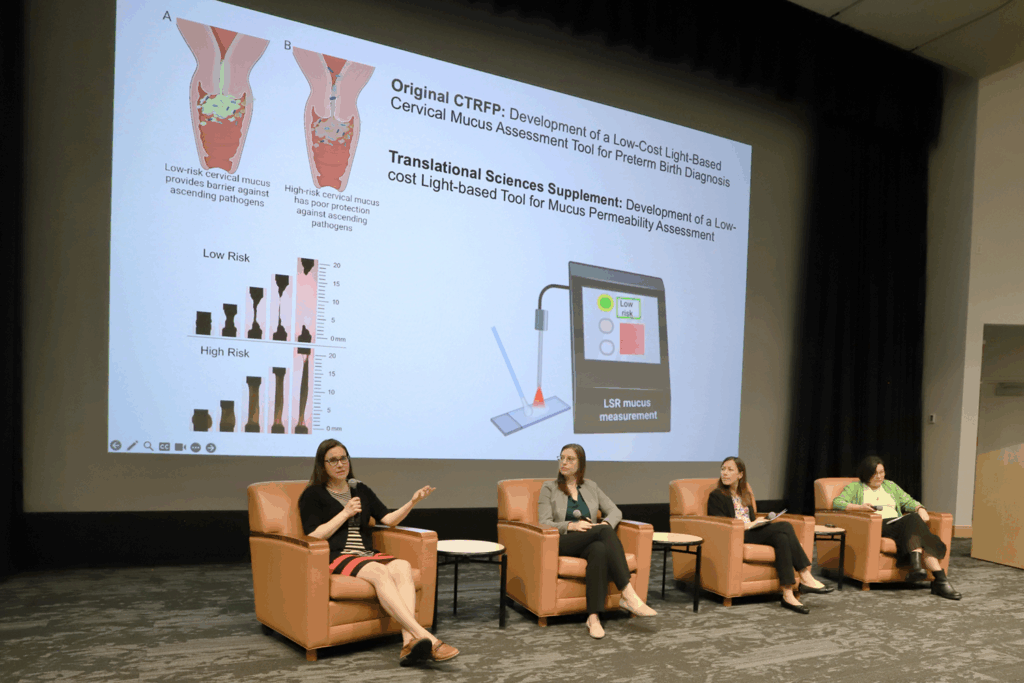
For O’Brien’s project, “Development of a Low-Cost Light-Based Cervical Mucus Assessment Tool for Preterm Birth Diagnosis”, the team proposed to develop a low-cost, light-based tool that could quantify cervical mucus (CM) properties at the point-of-care and be used to identify patients at high risk of pre-term birth. Researchers have identified that CM of patients at high risk for preterm birth is susceptible to the passage of microbes, and the goal of the project was to understand when, how, and why some patients’ CM changes during pregnancy, which is not currently known.
“The first half of this project was very translational – can we measure this, and would it be clinically useful?” says O’Brien. “The second half of the project was trying to better understand what about the mucus makes it less permeable. A lot of research has been done that shows hydration is highly related to permeability, so we wanted to add this additional piece of information to see if we could get this additional angle on what and why the mucus is behaving the way that it is.”
To further develop this project to meet the needs of translational science, O’Brien was also selected in March 2025 to receive one of the first ICTS Translational Science Supplemental Funding awards. These grants aim to develop currently funded ICTS awards into projects that address one or more principles of translational science. NCATS, the funding agency of the ICTS, has a special interest in advancing translational science, which is distinct from translational research. Translational science addresses common challenges to achieve advances that are innovative or broadly applicable.
“I think one of the really exciting parts about this project, in particular, that I think caught the eye of ICTS reviewers, is that it has the possibility to be opened up to a lot of different diseases, not just with cervical mucus or pertaining to preterm birth,” says O’Brien. “This could be relevant for patients who have recurrent pelvic inflammatory disease or pelvic infections. It is also hypothesized that patients with certain types of GI disorders and bowel disease may have poor mucus quality. This is the same for lung disease, if there is diseased mucus present in the lungs.”
Support from the ICTS
In addition to the MSS, Community Studio, and CTRFP Funding Program, O’Brien has also used the resources within the Biostatistics, Epidemiology, and Research Design (BERD) function for enhancing grant applications, analyzing data for publications, setting up lab experiments, etc. O’Brien points out that as an investigator, it is also important to give back and serve as a reviewer for funding mechanisms or programs that they have used, as well (i.e., CTRFP, MSS).
O’Brien says having an entity like the ICTS gives the university an immense edge, with investigators being surrounded by a rich set of supporters and experts to help refine the “good ideas”, particularly in the clinical space.
“Let’s be honest – as investigators, not ALL of our ideas are good ideas, “ says O’Brien. “It is incredibly helpful to sort of have this test bed in the ICTS to be able to float these ideas and receive that valuable feedback. This is especially important for young, early-stage investigators. The old phrase is, “Don’t just give a me a fish, give me a fishing pole”, and that is how I have found a lot of interactions with the various ICTS support services to be. It’s invaluable, it’s special, and it’s just full of opportunities that help you to be constantly learning and growing.”