21. Digital Mental Health Intervention for Musculoskeletal Patients with Co-existing Depression and/or Anxiety
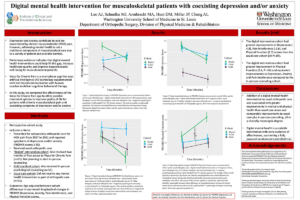
Introduction: Although depression and anxiety negatively impact patients’ responses to standard orthopedic treatment, mental health is not routinely addressed in orthopedic care. Digital mental health interventions may be a feasible, effective way to address mental health in orthopedic care settings, but recent literature calls for more comparison data between digital interventions and other treatment arms. […]

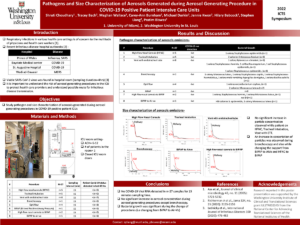
22. Pathogen and Size Characterization of Aerosols Produced during Aerosol-generating Procedures in COVID-19 Positive Patient Intensive Care Units

Introduction: Airborne transmission of SARS-CoV-2 is thought to be greatest during aerosol-generating procedures (AGP) in the hospital. The true risk posed by AGPs is not well understood. Methods: Aerosol capture and real-time particle size characterization were performed in the medical intensive care unit (MICU) during mechanical ventilation, bi-level positive airway pressure (BiPAP) ventilation, high-flow nasal […]

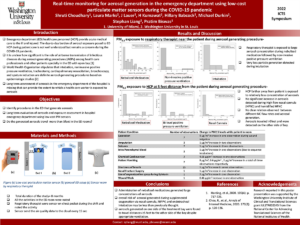
23. Real-time Monitoring for Aerosol Generation in the Emergency Department using Low-cost PM Sensors during the COVID-19 Pandemic

Introduction: Emergency department (ED) healthcare personnel (HCP) provide acute medical care to the ill and injured. The day-to-day burden of aerosol exposure posed to ED HCP during patient care is not well understood, but remains a concern during the COVID-19 pandemic. Methods: Baseline air quality and aerosol characterization during routine ED patient care and emergent […]

24. An Integrated Machine Learning Model to Predict Respiratory Failure for COVID-19 Tested Patients in the Emergency Department:  A Silent Prospective Trial

Introduction: Acute hypoxemic respiratory failure (RF) is the hallmark symptom of COVID-19 infection that can lead to escalating oxygenation requirements and critical care utilization. Early identification of patients at risk for respiratory decompensation can facilitate timely resource deployment and mitigate care delays. To facilitate resource alignment with patient needs, a machine learning (ML) model designed […]

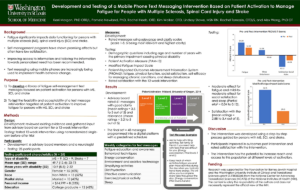
25. Development and Testing of a Mobile Phone Text Messaging Intervention Based on Patient Activation to Manage Fatigue for People with MS, SCI and Stroke

Introduction: Fatigue significantly impacts daily functioning for people with disabilities (PwD). Self-management programs targeting fatigue have shown promising effects for PwD. However, current satisfaction with fatigue self-management programs is low for PwD. Tailoring a self-management intervention based on patient activation may overcome this issue. This study aimed to describe the development of a mobile phone-based […]

26. The Role of Patch Testing for the Evaluation of Adult Patients with Hand Dermatitis: A Retrospective Cohort Study

Introduction: Hand dermatitis is a common dermatologic condition with a lifetime prevalence estimated to be 20%. The objective of this study was to assess the demographics and patch test positivity in adult patients who underwent patch testing at our institution with a focus on patients with hand dermatitis. We hypothesize that tobacco smoking is a […]

27. Pseudomonas Aeruginosa Establish Reservoirs in New Hospital Sink Drains and Show High Relatedness to Isolates Recovered From Clinical Blood Cultures

Introduction: Healthcare-associated infections acutely threaten intensive care units (ICUs) with studies indicating that Pseudomonas aeruginosa (PSAR) reservoirs in hospital built-environments can lead to infections and outbreaks. Despite this, it is unclear how pervasively antibiotic resistant organisms (AROs) like PSAR colonize ICU surfaces. We sampled surfaces in a newly-built stem cell transplant and oncology ICU before […]

28. Changes in the Local Skin Microbiota in Women with Breast Cancer after Mastectomy

Introduction: The late onset and unusual microbiology of some breast-implant associated infections suggests local skin microbiota as a possible source of infecting bacteria. Methods: Breast and axillary skin swabs, antibiotics, and skin product use were collected from women planning to undergo mastectomy with immediate implant reconstruction during the preoperative and up to four postoperative clinic […]

29. RESTORE Declined Livers Study; A Single Center Prospective Non-randomized Trial

Introduction: There is a severe shortage of available liver transplants to meet the needs of patients on the waiting list. There are many factors contributing to this shortage and poor organ utilization is a significant one. A large proportion (~20-35%) of livers are discarded based on subjective assessment and concern for organ quality. Objective criteria […]

30. Use of Belimumab for Prophylaxis of Chronic Graft-Versus-Host Disease

Introduction: Belimumab (BEL) is a monoclonal antibody which inhibits binding of B-cell-activating factor (BAFF) to its receptors on B cells, thus inhibiting the survival of alloreactive B cells. Given the role of B cells and BAFF in chronic Graft-versus-Host Disease (cGvHD) pathophysiology, BEL might have a role in prevention of cGvHD. We hypothesized that targeting […]